

Ski
15.10.2026
10 tips for a great start to skiing at Puy Saint Vincent
Vous préparez votre premier séjour au ski à Puy Saint Vincent ? Quelques conseils vous aideront à découvrir la glisse sereinement....
Read more
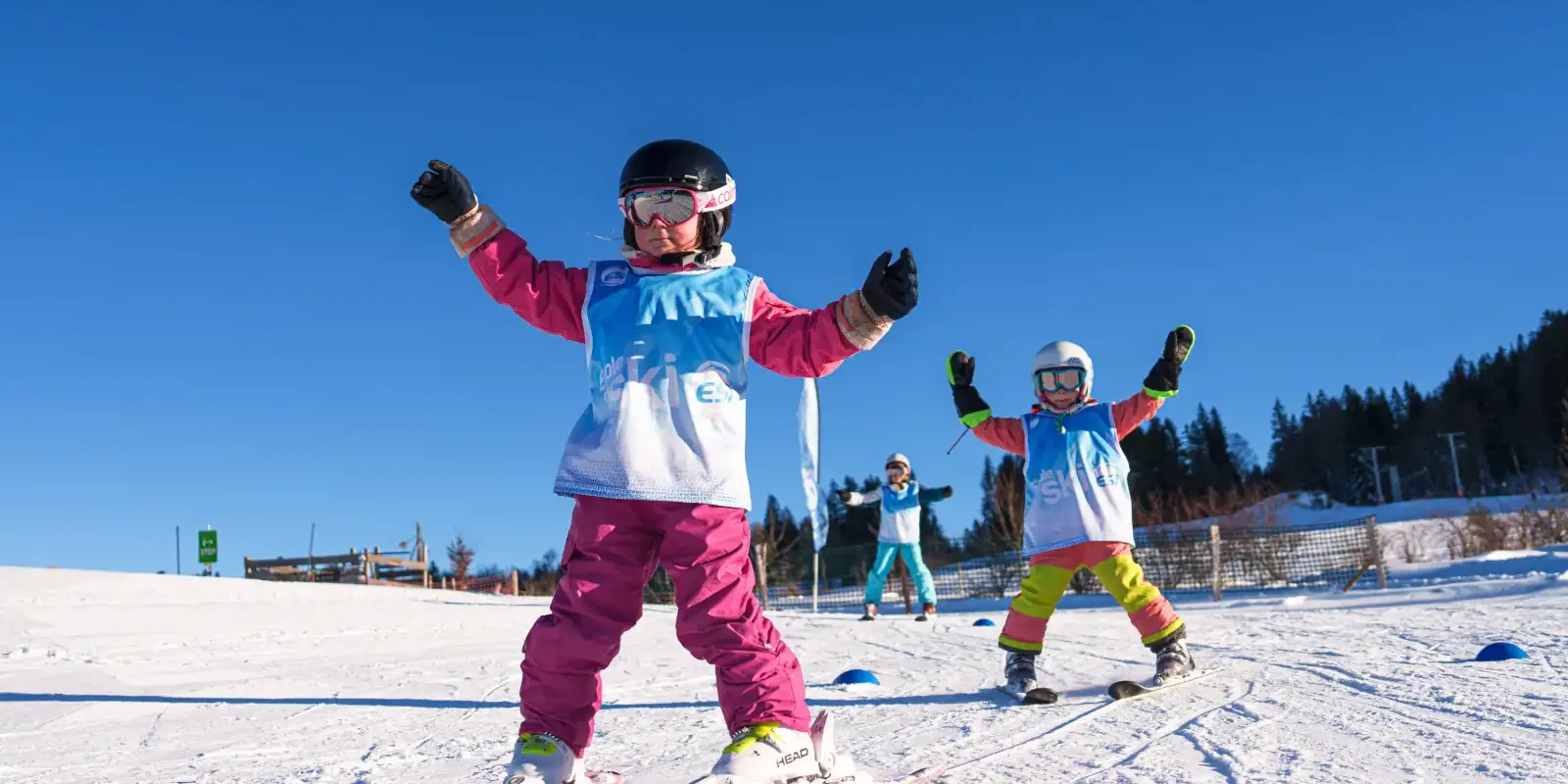
Is your child about to discover skiing in Puy-Saint-Vincent? You might be wondering how to handle any hesitation they may show. Should you stay close to the group? What should you say when they ask for their parents? How can you offer encouragement without placing too much pressure on them to achieve specific results?
For a child, this first session is as much an emotional discovery as it is a sporting one. They are meeting an adult, joining a group, and exploring entirely new sensations. Your role is to provide a sense of security and familiarity; the instructor will then take over to guide them through their first moments on the snow.
For parents, the first lesson is often associated with making those initial turns. For the child, however, the experience begins long before they start sliding. They are encountering rigid ski boots, unfamiliar snow, and a bustling, lively environment—all while having to listen to someone they barely know. These new elements require a great deal of focus. Consequently, a child might seem reserved, even if they had been eagerly looking forward to the holiday. Their silence doesn’t necessarily mean they don’t enjoy skiing; they may simply be taking the time to observe. Conversely, a child who is otherwise enthusiastic might hesitate when the moment comes to join their group. Accept this shift in mood without criticizing their hesitation.
Your child doesn’t need to know the technical skills they are about to learn. What they really want to understand is how the separation will unfold. Simply explain who will be with them, where you will meet again afterward, and what will happen once the session is over. You might say: “You’re going to discover skiing with your instructor. I’ll meet you right here after the lesson.”
Keep your explanations short and concrete. Avoid outlining a detailed schedule that you cannot guarantee. Providing reliable points of reference is more reassuring than promising a successful outcome. Also, avoid phrases like, “Don’t worry, you’ll never be afraid.” Your child needs to be able to express their emotions freely.
This initial interaction helps your child identify the person who will be guiding them. Make the introduction calmly, then allow the instructor to speak directly to your child. Your child might respond, smile, or simply listen. You can share relevant information without having a long conversation in front of the entire group—for instance, by mentioning that your child finds separations difficult or has had a challenging experience in the past. However, avoid labeling them as “fearful” or “bad at sports.” Such labels do not define their future potential. Instead, describe a specific situation: “They need a little extra time to settle into a new activity.”
Once the instructor takes over, follow the team’s guidelines regarding your departure. State clearly that you are leaving; do not slip away while your child is looking elsewhere. A simple ritual—such as a hug, a few words, and a clear indication of when you will return—can provide a helpful sense of stability. Returning repeatedly can sometimes make the separation more confusing, as your child may end up constantly looking for your reappearance. That said, there is no single approach that works for every situation; if the separation remains difficult, talk to the instructor.
The goal is to create a transition that your child can easily grasp.
Tears can signal various needs: a desire to stay with you, a need for warmth or rest, or a struggle to make sense of a new situation. Avoid jumping to the conclusion that your child simply doesn’t want to ski. Take a moment to listen to what they are trying to communicate. You might acknowledge their emotions by saying, for example: “I can see that starting this is difficult for you.” This validates their feelings without pre-determining what happens next. The instructor can then suggest an appropriate approach—perhaps by starting a conversation or introducing an initial activity. If the distress persists, talk to the staff; the child’s well-being should always be the guiding factor in any decision.
Your child is gradually becoming familiar with the instructor’s voice, instructions, and words of encouragement. Frequent interventions from a parent can be distracting, leaving the child torn between your guidance and the instructor’s directions. If you are observing the session, please respect the structure set out by the ski school. Avoid calling out to your child to correct their posture; a single fall or an unsuccessful attempt at an exercise does not define their entire experience. The instructor has a broader perspective from which to assess the child’s needs. After the lesson, you can ask for feedback on how your child is adapting—focusing your questions on their comfort level and participation.
A first session isn’t measured solely by the distance covered. Your child might have agreed to join the group, listened to an instruction, or asked for help. They might have tried an exercise after watching for a while. These steps are all part of the learning process. Gaining confidence can come before visible technical progress. Avoid comparing their session to another child’s; you don’t necessarily know their respective levels of experience. Instead, rely on feedback from the instructor and the memories your child shares.
When the lesson ends, your child might want to tell you all about it—or simply run into your arms. Give them the time they need. You can talk about skiing later, when they are ready.
To start the conversation, ask an open-ended question:
Avoid focusing the conversation immediately on speed, turns, or earning a medal. Listening to your child’s responses will help you understand their experience, without turning the end of the lesson into an evaluation.
If your child refuses to return after the first session, it’s worth having a calm discussion. A refusal alone doesn’t reveal the underlying issue; your child might be struggling with being away from you, experiencing physical discomfort, or feeling intimidated by a particular exercise. Ask them what is bothering them, without jumping in with suggestions. Afterward, talk to the instructor to hear their observations. Together, you can find an appropriate adjustment—sometimes, a simple explanation or a clearer point of reference is all it takes to make the next session go more smoothly.
Avoid using threats or making comparisons, as these may cause your child to view skiing as an obligation rather than an enjoyable activity. If your child remains very reluctant, take the time to re-evaluate the situation with the ski school.
During the first lesson, conversations between parents and the instructor provide valuable insight into each child. At ESi Puy-Saint-Vincent, we encourage you to share your child’s past experiences and any concerns they may have. This allows our instructors to tailor their explanations and guide your child through their discovery of the sport at a comfortable pace. There is no need for your child to prove their skills during the very first session; instead, they are simply exploring a new activity, experiencing new sensations, and finding their bearings.
Get in touch with our team to prepare for your child’s first ski lesson in Puy-Saint-Vincent and let us know about their specific needs.
Ski
15.10.2026
Snow
15.10.2026